Why Love's Pro Moving & Storage Company Invests in Continuous Training
Moving looks simple from the curb. A few strong backs, a truck, some boxes, and a long day. Anyone who has worked a real move knows better. It’s choreography, risk management, customer service, and logistics layered into a single, high-pressure event. One small lapse can cost hours, money, or trust. That is why the best moving companies treat training not as a one-time orientation, but as an ongoing system. Skill fades without repetition, and the job keeps changing: building codes, packing materials, road conditions, equipment design, even customer expectations. Continuous training is the guardrail that keeps quality stable when everything else is in motion.
I have taught rookies how to shoulder a sofa down a twisty brownstone staircase, and I have retrained veterans after a preventable tip-over scraped a client’s antique armoire. You learn quickly that “how we’ve always done it” is the most dangerous sentence on a moving crew. The companies that outperform year after year share one habit. They invest in training that is frequent, specific, and measured against outcomes.
The real cost of untrained minutes
The hidden costs in moving rarely show up on a quote. They emerge as fatigue near the end of a long carry, a missed hand signal while backing a truck into a tight driveway, or a sloppy wrap job when weather moves in. I once watched a two-minute briefing on spotter positioning during a rainy morning save us from a bent garage door track. Two minutes for a ten-second backing maneuver that could have cost a thousand dollars and a poor review. Multiply that by a season, and you understand why training is cheaper than repairs and reputation damage.
In practical terms, here are the failures that training prevents most often: dropped corners, doorframe dings, crushed cartons under load in the truck wall, strained backs from twisting with weight, and time sinks when a crew doesn’t share a common sequence for old-house disassembly. None of these failures require exotic fixes. They require consistent muscle memory, shared language, and a habit of pausing for a quick check before lifting or loading.
How continuous training actually looks on a moving crew
The romantic version of training is a day in a classroom with a manual. Effective training looks smaller and closer to the job. It’s a pre-dawn tailgate talk about a client’s steep driveway and the plan for chocks and cones. It’s a wrap-and-ratchet practice on a slow Wednesday using a scratched dresser and straps marked at ideal tension spots. It’s an hour in the warehouse testing ramp angles, then documenting which grade works safely under which wheel sizes. It’s mapping shoulder heights on the wall for tall bookcases so crews can practice tipping points with spotters. Short, frequent, and tied to real work.
Any company can hold a yearly safety meeting. The better approach layers training into operations every week. Crews practice time-critical tasks until they run smoothly under fatigue: blanket wrapping at scale, labeling for split deliveries, switching grip mid-staircase without the load shifting. Supervisors rotate through jobs with checklists to confirm alignment, not to punish. When someone invents a cleaner solution, it gets added to the shared standard, not left as a one-off trick. Training is both tradition and evolution.
Inside Love's Pro Moving & Storage Company’s approach to training
Love's Pro Moving & Storage Company treats training as part of the service, not overhead. The idea is simple. A well-drilled crew makes a client’s day feel lighter and keeps the company’s promises intact. At their best, training rhythms mirror the work rhythms. Busy seasons get quick refreshers on fatigue management, hydration, and high-heat protocols. Slower weeks emphasize specialty skills like piano dollies, safe piano cradles, and balancing loads across axles for interstate trips.
When I’ve observed their crews, the pattern is clear. New hires don’t just ride along, they complete a skills circuit before they ever enter a client’s home. They learn to build a solid wall in the truck bay using scrap furniture and mixed carton sizes, then get feedback on tie-downs. They strip and rewrap the same armchair until there are no exposed corners, no tape marks, and smooth handholds. They practice a three-person couch turn through a fake tight stairwell built in the warehouse, refining foot positions so the heaviest section never swings uncontrolled.
Training for the risks you do not see
Ask any lead mover about the scariest moment of the job and they’ll likely mention hidden weight, not visible obstacles. Furniture with granite tops, sleeper sofas with internal frames, old pianos with shifted soundboards, fish tanks with hairline cracks, or server racks that look empty but still have rails and power units. Training teaches skepticism in the right places. Before lifting, you test. Before loading, you center. Before driving, you anticipate the route’s worst corner and plan for it.
Love's Pro Moving & Storage Company’s teams practice weight estimation and balance by feel and by number. They use a luggage scale on awkward items so that guesses become ranges and ranges become plans. Crews rehearse what to do when a load starts to shift. It’s not a matter of strength, it’s a script: lower to the nearest stable surface, call the support, reset grips, and ensure the load path is clear. Those seconds of choreography are learned, not improvised.
The craft of packing, learned and relearned
Packing looks easy until you have a client with 200 linear feet of books and a library’s worth of rare editions. Paper type matters. So does box size. Too large, the bottom fails. Too small, you burn labor. Tape tension, corner protection, and cushioning are the small arts that protect value. I have seen a crew shave an hour off a kitchen pack simply by pre-building partitioned glassware boxes and staging a clean wrapping station. That type of efficiency only sticks if it is taught, practiced, and refined.
Love's Pro Moving & Storage Company trains packers on material science in plain terms. Dish barrel boxes carry more weight safely than standard mediums, foam sheets prevent abrasion better than paper alone for polished metal, and double-walled boxes handle stacked loads inside trucks positioned in the high-pressure zones near wheel wells. The lesson is not just what moving companies conroe tx to use, but where to place the packed items in the truck so they are spared from compressive forces during hard braking or rough roads. A pristine packing job can still fail if it sits under a 400-pound buffet sliding forward. Training loops those realities together.
Why ongoing training beats “experience” when the weather turns
Experience helps until the day turns odd. Summer storms in Texas create a rapid-fire set of problems: slick ramps, swelling door frames, and cardboard that softens on contact with moisture. Winter fronts are rare but bring brittle plastics and colder hands that grip less securely. The best crews rehearse for these edge cases. They know when to switch from cardboard to plastic bins, when to swap gloves for better grip, and how to stage coverage so nothing sits exposed when a cloud bursts.
I once saw a veteran loader in Conroe cut damage rates in half during a wet week simply by retraining his team to tarp doorways and stage rugs near thresholds as traction mats. Common sense once you’ve done it, but it took a morning of practice and some reminders during dispatch to make it automatic. Love's Pro Moving & Storage Company includes weather protocols in their refreshers, from moisture barriers on pallets for storage intake to dehumidifier usage when staging items for climate-controlled storage. That reduces warping, keeps mold at bay, and avoids the small heartbreaks that show up weeks later when a client unpacks.
Precision and humility: two values training reinforces
The best movers have a look that is hard to fake. They move like they have already imagined what can go wrong. Precision shows up in little choices, like removing door hardware to gain a clean inch rather than forcing a turn, or adding a runner over a tile that looks fine but turns slick with dust. Humility appears as the willingness to slow down, ask for a second set of hands, or make a second trip rather than testing a questionable lift. Training reinforces both traits because it frames the job as technique, not heroics.
Love's Pro Moving & Storage Company emphasizes post-job huddles where crews note what worked and what didn’t. When a near-miss happens, they log it. A scratched baseboard becomes a lesson for how to stage hardboard panels earlier in the sequence. A tight schedule missed by 30 minutes leads to a change in the order that rooms get loaded. Over months, these sessions turn into a living playbook.
Continuous training for long-distance moves
Long-distance moves add variables that local work rarely sees: weigh station compliance, interstate hours-of-service limitations, varying municipal rules for parking and access, and the simple physics of load shift over hundreds of miles. A driver can be elite at backing a 26-foot truck in town and still make costly mistakes on a two-day haul if the load is not built to travel. That means cross-bracing tall items, building buffer zones around glass, and redistributing weight after the first day if strapping has compressed.
Companies that train for long haul focus on route planning as a skill, not a task. Crews learn to check bridge clearances, avoid low-canopy roads during leaf-heavy seasons, and schedule fuel stops with room to maneuver. Love's Pro Moving & Storage Company includes route simulations and weight distribution exercises in its long-distance track. Drivers practice scaling trucks, adjusting for legal axle weights, and reading the load after the first 50 miles to ensure nothing is settling into trouble. Clients never see those drills, but they feel the outcome when the truck opens and everything stands where it should.
Storage demands their own curriculum
Storage is not passive. Items change in storage, particularly wood furniture, leather, and certain plastics. Training must cover intake inspection, humidity control, pest prevention, and stacking rules for long-term stability. Storage damage often starts with small misses: a mattress stored upright without support, a sofa wrapped tight without breathable gaps in climate control, a stack of boxes with different compressive strengths that slowly pancake the bottom row.
Proper storage training teaches crews to read labels and match box types by crush rating, not just size. It covers palletization, airflow spacing for climate-controlled units, and smart placement for items that clients are likely to access mid-term. Love's Pro Moving & Storage Company places heavy emphasis on storage intake. Their crews photograph condition, apply unique identifiers, and map unit layouts so retrieval runs faster. That system demands training in inventory management software, but also in the analog skills that keep a warehouse tidy. A well-run storage floor is quiet and predictable, which only happens when teams share a standard.

Safety culture that survives busy season
Safety lectures are easy when schedules are light. The real test comes when orders stack up and crews feel the time squeeze. That is when shortcuts tempt and injuries spike. Continuous training works only if it holds under pressure. The strongest safety cultures aren’t loud. They are habitual. A spotter appears without a call. A lift stops when communication falters. Load straps get rechecked at the first fuel stop. When something feels wrong, the team has permission to fix it, even if it adds minutes.
Love's Pro Moving & Storage Company embeds small safety checks into daily dispatch. Crews confirm PPE by touch, not just a glance. Trucks get spot inspections for strap count, corner protectors, and blanket inventory. Supervisors rotate in for surprise audits that aim to help, not penalize. The consistency keeps injury rates low and keeps experienced movers on the roster. Retention matters. A well-trained veteran is worth their weight in fewer claims and smoother days.
Training for specialty items: pianos, antiques, and servers
Specialty moves deserve their own lanes. You cannot improvise a baby grand’s safe path down a narrow stairwell. The technique requires piano boards, skid plates, custom straps, and a practiced team that moves like one unit. Antique armoires demand protective layering: foam for corners, blankets, then shrink wrap for containment, with extra attention at the feet where pressure concentrates. Server racks and delicate electronics travel best when vibration is minimized and temperature remains stable, which affects route choice and even how you accelerate and brake.
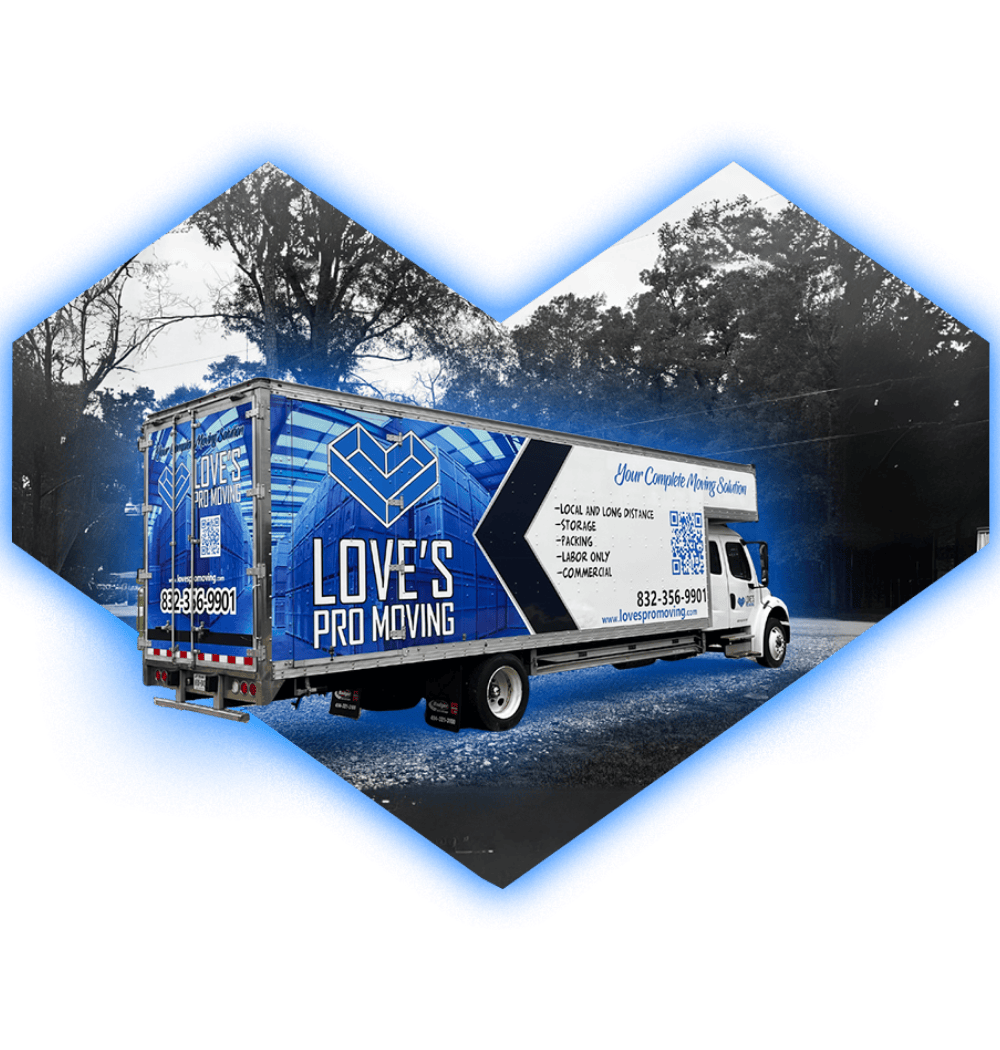
The training for these items includes both tools and choreography. Crews practice hand signals for blind spots, build custom crating for sculptures, and learn when to say no to unsafe requests. Love's Pro Moving & Storage Company runs specialty sessions where movers disassemble and reassemble mock pieces repeatedly. That repetition breeds calm on the real day, when nerves and client attention can cause even confident hands to rush. Good training slows time. It gives the crew a known sequence to return to, which prevents errors when attention is split.
Customer experience is a skill, not a script
A move carries emotion. People are leaving old rooms and stepping into new ones. Tension shows up as micro-tests: a client watching a favorite chair get wrapped, a neighbor eyeing the truck near their lawn, a building superintendent checking elevator pads. Technical work can be perfect and the day can still feel rough if communication fails. Training has to include customer interaction that is clear, honest, and steady.
I’ve seen the tone of a day change when the crew lead explains the plan in plain language, sets realistic time ranges, and calls out when the team is pausing for safety. Short updates de-escalate worry. Love's Pro Moving & Storage Company builds these habits into its onboarding. New leads practice briefing a homeowner, handling last-minute adds without overpromising, and documenting exceptions. They role-play conversations about scratches that predate the move so later disagreements become unlikely. That work isn’t flashy, but it keeps trust intact.
Measurement, feedback, and why checklists don’t train themselves
Training without measurement becomes folklore. Good programs track metrics that matter: claim rates, injury frequency, on-time arrivals, loading efficiency, and client satisfaction by crew. The numbers tell you where to focus. If glassware claims tick up in summer, you review packing sequences and truck stacking near heat zones. If crews arrive late to afternoon jobs consistently, you look at morning staging errors or route choices.
Love's Pro Moving & Storage Company ties feedback loops to these metrics. They share anonymized summaries with crews, fix the system before blaming the individual, and celebrate improvements with specifics. When a team cuts loading time by 20 percent without a bump in claims, they teach the method to others. Training becomes not just top-down, but peer-driven. That is when it sticks.
Two quick checklists that crews actually use
- Stair carry basics: agree on commands, test weight and balance, clear landings, set pace, rest before fatigue, not after. Truck wall building: heavy low and forward, tall against the wall with protectors, cross-brace with mattresses or pads, straps at multiple heights, verify no hard edges touch bare wood or glass.
These are small, but used daily. They prevent the kind of compounding issues that create damage later.
When training meets tight schedules and last-minute changes
Plans shift. Elevators break. Closings move. A dependable crew doesn’t fall apart when conditions do. Adaptability is not a trait you hire for and hope it shows up. It’s trained. You run table-top exercises: what if the freight elevator is out for two hours, what’s the sequence? How do you pivot when the client adds a storage stop mid-route? Which items can wait, and which must go today?
Love's Pro Moving & Storage Company prepares crews for these pivots. They teach triage: identify critical path items, arrange temporary staging, and coordinate with dispatch for the cleanest new route. They back it up with communication habits so the client never feels left in the dark. The result is simple. Days that could unravel instead bend and keep moving.
Technology helps, but technique still wins
Routing apps, inventory scanners, and digital condition reports streamline the work, but they don’t tighten a strap or steady a cabinet. Training sits between tech and technique. Use the tool, then trust your senses. A tablet might mark a box as fragile, yet your hand says the weight distribution is off. You move that box, or you re-pack it. Dashboards are only as good as the people feeding them accurate observations.
Crews at Love's Pro Moving & Storage Company learn the tech during onboarding and refreshers, then learn when to override with judgment. That balance keeps operations modern without letting convenience blunt craft.
Continuous training protects margins and morale
There is a pragmatic angle to all of this. Moving margins are earned in minutes saved without damage. Training cuts rework, keeps trucks rolling on time, and reduces lost days from injuries. But there’s another benefit. Well-trained crews feel competent. Competence produces pride. Pride reduces turnover. Keeping a seasoned team together through multiple peak seasons is the closest thing to a competitive advantage in this industry.
I’ve watched new hires become anchors in less than a year when given a clear ladder of skills to climb and mentors who care. That is culture, but it is also curriculum. People stay where they grow.

What clients feel when training is working
Clients rarely ask for training programs. They ask for safe, on-time moves. When training is robust, here is what they notice without naming it: quiet confidence during difficult lifts, steady updates that match reality, trucks that open to a neatly strapped, grid-like load, and a home that looks the same as it did, minus the items, when the crew leaves. On delivery days, they see staging that anticipates traffic flows in the new home, labels that make sense, and crews who adjust furniture placement without breathing hard.
I recall a Conroe family with a last-minute schedule shift due to a delayed closing. A crew from Love's Pro Moving & Storage Company split the job into two stages, staged key items in short-term storage with climate control, and delivered a lean “first-night” set to a temporary rental. The family never had to dig through a mountain of boxes to find crib parts. That wasn’t luck. It was the result of training in staging, labeling, and storage intake protocols.
The through line: training makes the work quieter
The best days in moving are calm. Not slow, not easy, but calm. You hear the tape rip, the quiet callouts on stairs, the click of ratchets setting in sequence. Training produces that sound. It removes friction from a thousand small tasks, leaving room for attention where it’s needed most. It keeps the crew’s energy for the lifts that matter, not the ones that could have been avoided with a smarter sequence.
Love's Pro Moving & Storage Company invests in continuous training because it aligns with everything a good mover values: safety, speed without hurry, respect for the spaces you enter, and a final picture that matches the promise. The work is never finished. That is the point. Techniques improve, materials evolve, buildings surprise you, and people bring new challenges. A company that keeps training treats change as a normal part of the job.
A final word from the field
I have seen a rookie freeze halfway down a staircase under a sofa’s weight. I have watched a veteran set a hand on his shoulder, tell him to breathe, and reset the sequence: two steps back, pivot left, lower to the landing, switch hands, and go again on three. That playbook lived in the veteran because someone taught it to him, and because he had rehearsed it a hundred times. Continuous training is not a program. It is the transmission of craft from one set of hands to the next.
For clients, that transmission shows up as smooth moves, intact belongings, and crews who look like they have done this before, because they have, in practice, many times over. For companies, it keeps promises credible. For crews, it keeps bodies strong and days satisfying. And for anyone who has ever felt a sofa tilt the wrong way on a tight turn, it is the difference between a hard day and a bad one.